Tofu, In Transition

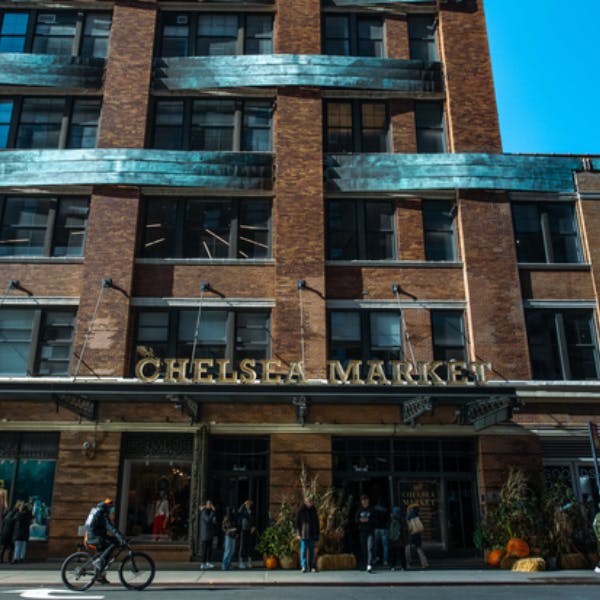
“Bagels” were one of the top words I associated with New York City when I knew that I would be going on a one-month journey in the Meatpacking District. “I could finally taste what an authentic bagel would be!” I thought to myself. Bagels in Hong Kong are often softer — sometimes I thought they were just another ring-holed brioche, denser and more filling. Upon arriving in the Meatpacking District, I opened up my Google Maps to type: “bagels” — only to find myself standing in front of the line at Black Seed Bagels at Chelsea Market, staring at the bagel combos to build my own lunch. I was determined to get an everything bagel, yet my eyes stopped at the spread option: tofu scallion. After a full day at work, my mom would make steamed tofu with scallion sprinkled on top for dinners. From a standalone dish to a condiment ready to be molded with other flavours, tofu here takes on a different form and texture. What would tofu cream taste like when served with pastrami-spiced smoked salmon? As the umami of the salmon layered with the slight spiciness of scallion, soybeans took the backseat, adding some creaminess to the bagel. This marked the beginning of my exploration journey in the Meatpacking District and New York City in the past month. Throughout, I kept going back to one question: How does culture travel and evolve through food?
Born and raised in Hong Kong in a Cantonese household, I found my first view of other cultures shaped by food, and especially by the local dine-out culture. In a city that paces itself on par with, if not faster than, New York, dining out is part of the everyday rhythm. Just as sushi and teokbokki were my first Japanese and Korean words learnt, food culture encompasses all five senses through which we connect ourselves, as individuals, to the broader world.
It is the entry point to a way of life. Because culture as a term is broad, food gives us a stage that everyone can access, as long as they are willing to try. That was echoed throughout a conversation with Pearl River Mart’s Angela, as we chatted about the thoughts and curatorial directions behind bringing the Chinese culture to New Yorkers and visitors alike in both of their Chelsea Market and SoHo locations. The conversation reminded me of a casual chat with colleagues over spots for Char Siu and Dim Sum in the Manhattan Chinatown, as they shared how these spots were their first taste of Cantonese cuisine. Food has become a linguistic sign: instead of having to translate it as “Cantonese-style roasted barbecue pork”, charsiu has re-rooted itself in the NYC / the English context so that transliteration alone is enough. Or, perhaps only transliteration can do it justice — in two syllables, we have captured the smell of honey and the reddish brown colour of the meat.
Beyond language, food is also a signifier of cultural shifts in progress. As the sea salt chocolate halva from Seed+Mill melted in my mouth, I thought of the black sesame soup — a bittersweet, nutty dessert that shares the thickness of chowder — at the dessert shop that marks my daily entrance to the shopping mall en route to the metro station. While both of them are made with sesame, their difference in commonality signals the different waves of popular culture. White sesame, with tahini commonly used as a condiment in salads, is widely known — whereas black sesame is less well known, introduced as a new variation in East Asian cafés after matcha lattes flooded social media.
How food and space come together


Turning from the food itself to the larger cultural discourse, food can be seen as an experience, in which your surrounding environment also plays a part. As the sunlight shone through the Hanok-like wooden ceiling at Genesis House, I browsed through the book collection that spanned from Korean architecture to the best libraries in the world. I took a sip of the ogumcha — as I looked at the servers wearing a modified hanbok uniform — and let the ginger spice sink in. In a nested space sheltered from the Hudson River wind, how surreal it was to spot the visual cues that reminded me of another place — as if the places had come together and overlapped with each other in that space and time.
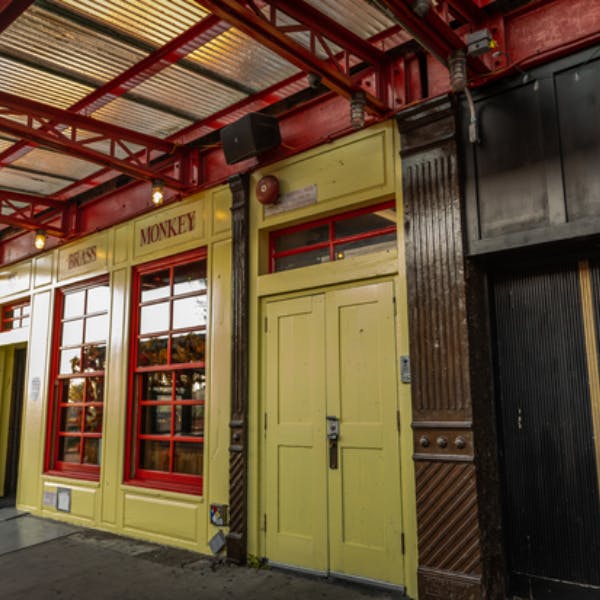
This overlap between spaces came to me once more at the marketplace at Poster House. A quick walk from the Meatpacking District to linger before a happy Friday drink with other fellows from the same cohort at Brass Monkey (their OnlyFans cocktail was a standout), I was aiming to get some postcards as keepsakes when I walked past an illustrator’s booth. While other illustrators were selling larger prints and postcards, her stickers caught my eye: pineapple buns, oyster sauce with the red cap, and the blue cookie tin…a sense of familiarity washed over me. I could not help but wonder: would she be a Hongkonger? I quickly typed her username on Instagram, only to see the first line of her bio: the Hong Kong flag with 香港人. In that instant, I felt how visual my memories are of Hong Kong: the red cap of the oyster sauce label is a direct homage to Lee Kum Kee, a homegrown staple that is a must-have item in every kitchen, and that blue cookie tin from Royal Dansk — while the brand has Denmark in their name, the cookies are not even available for sale within Denmark — is a love/hate affair in households during Lunar New Year, for they represent mouthwatering temptation and the tendency to overeat during the New Year.
All at once: an afternoon pastry
Food can recall different connections. On a Sunday afternoon, I decided to visit Papa d’Amour, the outpost by Dominique Ansel, because I was curious about what the chef was up to after the Hong Kong branch closed for good in 2024. I decided to go for the Kurobuta Hot Dog Spiral when I saw the inclusion of sticky rice in the roll — doesn’t it sound special to juxtapose the chewy texture of sticky rice with the crispy pastry? The soy sauce, pork sausage (precisely, 臘腸 lap cheong — with its distinct flavour coming from rose wine) and sticky rice would make a perfect 生炒糯米飯 lo mai fan combo on any winter day in Hong Kong. Here I was, experiencing a taste of home in a different temporal moment, as New York was entering its spring / summer season. As lo mai fan travelled across the continent, it took on a different temporal rhythm. This time, sticky rice warmed me in the winds of New York, at a time of year when I would never have thought of enjoying it in Hong Kong as the weather started heating up, and sticky rice became too filling in the face of humidity.
Back to Tofu: it’s time to come home
I walked into Mott Street Eatery on a Monday evening after searching for a place for quick bites in the evening — it was the first food hall that popped up on my Google Maps search. Portions at diners were too huge for me, and I was yearning for something hot for dinner, so salad bars were also out of the question. Kimbap, dan dan noodles, drinks…until I spotted a soymilk stall tucked into the inner corner of the house. The sign read 香港人和紐約分店 Yan Wo Dou Bin Inc (which translates to Hong Kong’s Yan Wo Soy Products — New York Branch). I hadn’t had soymilk for a while — and I had missed it, as other brands I found in grocery stores were usually vanilla-flavoured. The auntie at the cashier, seeing business start to die down in the evening, was chatting with someone over the phone in Cantonese. I cleared my throat, and said, “我想要一碗鹹豆花 (I would love to have a bowl of savory tofu pudding).” At that moment, cultures overlapped in the one bowl: in a food hall, where varieties are expected, I had a Hong Kong dish that was actually more Shanghainese, served by Cantonese hands.


From scallion tofu cream cheese to savory tofu pudding, food is a tying thread between Hong Kong and New York City. Walking along Ninth Avenue, where meat and fresh produce used to be packed and shipped elsewhere, I realised this moment of connection is not confined to the packing facilities that are long gone. The past month at the Meatpacking District was more than an exploration, more than an attempt to put myself in another city: it has enabled me to see the connections between culture and cities with more clarity. Food is only the point of departure that reveals more layers of transnational networks: it captures the journey of the soymilk that travels from Mong Kok to Mott Street, while allowing the illustrator to turn an oyster sauce bottle into a sticker as an homage to home. In the course of travel, it gets repacked and re-rooted, landing in another space it can now call home.
Back in Mong Kok, I sat down at the original Yan Wo outpost. I put down my backpack — carrying the laptop I had just typed the above on — onto the grey plastic stool, while the auntie looked at me, a silent gesture signaling that I should take my order immediately, without looking at the menu on the wall. Yes, I knew what I wanted: so I said, “唔該,要一杯熱豆漿同一碟煎豆腐! (A hot soymilk and a plate of panfried tofu, please!)”
WHILE YOU’RE HERE…




Loading...
INFO@MEATPACKING-DISTRICT.COM
Media Inquiries
MEATPACKING@BERLINROSEN.COM
MEATPACKING DISTRICT
MANAGEMENT ASSOCIATION
5th Floor
NY, NY 10014
tel:212-633-0185